


At Campers Lamar we know that many of you are hiring a motorhome for your holiday for the very first time. That is why we know you may have questions when it comes to choosing the vehicle that best suits your needs.
It is worth mentioning that there are 4 main families of motorhome: campervans, over-cab motorhomes, low-profile motorhomes and A-class motorhomes.
Choosing the right one will be essential to make sure it suits who you are and the adventures you want to have.
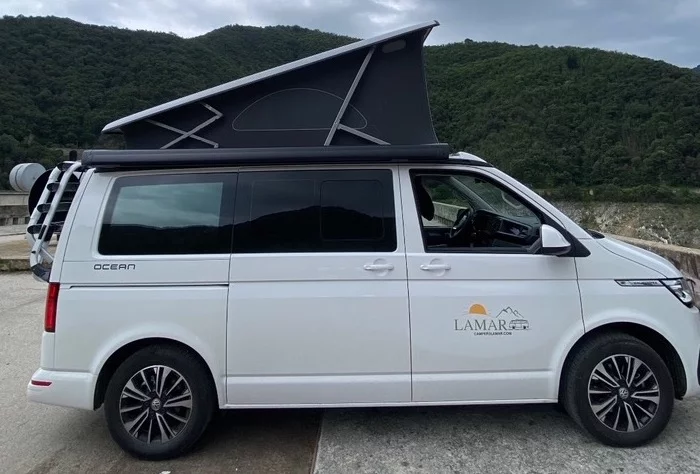
- CAMPERVAN
A campervan is a compact vehicle that has been converted and equipped to offer you all the comforts of a home on wheels. Unlike a larger motorhome, a campervan is usually smaller and easier to manoeuvre, which makes it ideal for those who want to travel with greater flexibility and accessibility. Although it is smaller, a campervan is fully equipped with the basics you need to travel and sleep comfortably, such as a bed, a kitchen, a water system and, in some models, even a bathroom.
The campervan has many advantages, but also a few drawbacks that are important to know about:
Advantages of the campervan:
-
Greater manoeuvrability: Being smaller and more compact, a campervan is much easier to drive and park than a conventional motorhome. It is ideal for travelling through towns and cities or along narrow roads, giving you more freedom to explore places that are hard to reach.
-
Self-sufficiency and freedom: It lets you travel completely independently. You can stop anywhere you like, from rest areas to more remote and peaceful spots, and enjoy nature or explore without having to rely on accommodation or restaurants.
-
Comfort in a small space: Despite their compact size, campervans are very well equipped. Many models include a bed, a kitchen (with hob, fridge and sink), and often a heating and air-conditioning system too, guaranteeing a comfortable travel experience at any time of year.
-
Fuel efficiency: Compared with larger motorhomes, campervans usually use less fuel, which means considerable savings, especially on long journeys.
-
Access to exclusive areas: Thanks to their smaller size, you can use smaller campsites, park in more central locations or even stay at campsites in areas where larger motorhomes simply do not fit. This gives you many more options when choosing where to stop.
-
Versatility and everyday use: Many campervan models are so versatile that, when they are not being used as a camper, they can work as a normal vehicle for getting around town or for family trips. This is very practical if you do not want a large vehicle taking up space when you are not travelling.
-
Lower cost: Campervans usually cost less to buy and maintain than a motorhome. This makes them more accessible for those looking for a "life on wheels" option without making a big investment.
Drawbacks of the campervan:
-
Limited space: Although campervans are very well optimised, their space is limited. This can be a drawback if you are travelling with several people or if you need more room for your belongings. You will not enjoy the same roominess as a larger motorhome offers.
-
Fewer comforts: Although they have the essentials, campervans do not usually offer the same comforts as a larger motorhome, such as a full bathroom, large showers or a spacious lounge. If you are looking for luxury or more comfort, this type of vehicle may fall short.
-
Limited equipment: Some campervans may not have enough storage for bulky luggage, which can be a problem if you are planning long trips or want to take sports equipment such as bikes or surfboards.
-
Limited sleeping capacity: In general, campervans are designed for two people or, at most, four. This means that if you are travelling with a large family or a group of friends, you will need to think carefully about the sleeping options or resort to additional camping.
The campervan is the perfect option for those looking for freedom, flexibility and the basic comforts of a mobile home without the complications of a larger vehicle. If your aim is to explore in a more intimate, comfortable and practical way, the campervan is an excellent choice. What is more, its size and manoeuvrability make it ideal for road-trip adventures and for making the most of your time in nature or in small villages.
It is an excellent choice for couples or small families, lovers of adventure and road trips, and those who value simplicity and independence.
- OVER-CAB MOTORHOME
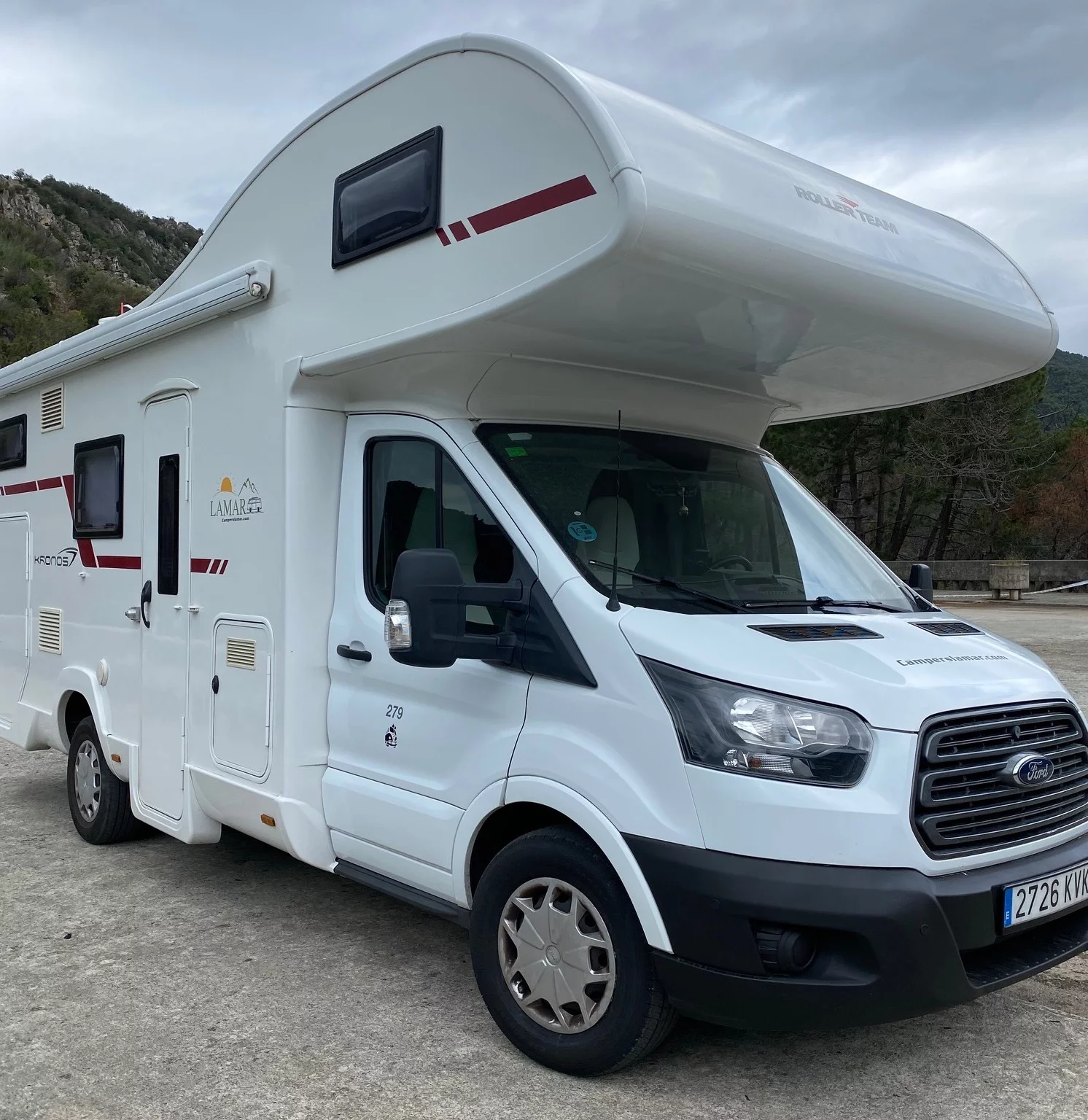
An over-cab motorhome is a type of motorhome characterised by a raised or extended section above the driver's cab that projects over the main living area of the vehicle. This "hood" or "over-cab" creates additional space above the cab, which makes it possible to add an extra bed or additional storage. Unlike other types of motorhome, such as A-class or low-profile models, over-cab motorhomes have a taller design and an upper area that is not part of the main living space.
Main features of an over-cab motorhome:
- Additional space above the cab: The most distinctive feature of an over-cab is the bed or storage space located just above the driver's cab.
- Cab separate from the rest: The driving area and the living space inside the motorhome are clearly differentiated, which can increase the feeling of space.
- Generally larger: In terms of size, over-cab motorhomes tend to be larger and taller, which means more room for all the comforts of a home on wheels.
Advantages of the over-cab motorhome
-
More berths:
Thanks to the "over-cab" or upper area, this type of motorhome offers an additional bed above the cab, which is ideal for families or groups of up to 6-8 people. This feature is highly valued by those travelling with children or who need more beds without taking up space in the rest of the vehicle. -
More interior space:
The taller, roomier structure allows a much more spacious interior layout, offering a more comfortable lounge, kitchen and bathroom. Over-cab models are ideal for those seeking greater comfort on long trips, as they can enjoy more space than in other, more compact models. -
Versatility:
Over-cab motorhomes are excellent for those travelling with large families or groups of friends, as the additional sleeping capacity makes it easier to accommodate several people comfortably. -
Better storage:
The additional space in the over-cab can be used not only for beds but also for extra storage. Some over-cab motorhomes have additional compartments for stowing luggage or camping gear without sacrificing living space. -
Driving comfort:
Although they are larger, many over-cab motorhomes have spacious and comfortable driver's cabs, often with features such as ergonomic seats and easy-to-use control panels. -
Ideal for long trips:
Thanks to its interior space and storage capacity, this type of motorhome is very well suited to long or extended trips, providing a comfortable and functional environment for living and sleeping for weeks at a time.
Drawbacks of the over-cab motorhome
-
Greater size and height:
One of the main drawbacks of over-cab motorhomes is their large size. This can make them harder to drive and manoeuvre in tight spaces or in places with limited headroom (such as underground car parks or low tunnels). -
Fuel consumption:
Because of their size and taller shape, over-cab motorhomes tend to be less aerodynamic than other models. This can result in higher fuel consumption. -
Difficult to park in small spaces:
Their greater length and bulk can make parking difficult, especially in urban areas or places where parking is limited. This can make over-cab motorhomes less practical for those planning to stop in hard-to-reach areas.
In conclusion, over-cab motorhomes are an excellent option for those looking for extra space, comfort and sleeping capacity. They are ideal for large families or groups of friends who value being able to sleep more people in the vehicle and having a roomier interior to move around in easily.
If your priority is comfort and space inside, and you do not mind a little extra size or fuel consumption, an over-cab motorhome will be an excellent choice for enjoying adventures on the road with everything you need for a long, comfortable trip.
- LOW-PROFILE MOTORHOME
A low-profile motorhome is a type of motorhome characterised by its aerodynamic and compact design, in which the driver's cab (the front section) is integrated with the rest of the vehicle. Unlike "over-cab" motorhomes (which have a large structure above the cab), low-profile models have a sleeker shape, with a lower roof and a smoother structure that helps to improve aerodynamics. The sleeping area is usually located inside the main body of the vehicle, with no additional hood or raised roof section.
Main advantages of a low-profile motorhome:
- Compact and aerodynamic design: Unlike A-class motorhomes, low-profile models do not have a fully enclosed cab, so their shape is more streamlined and more fuel-efficient.
- Well-used interior space: Although they are smaller than A-class motorhomes, low-profile models are designed to make the most of every inch of space. They often include clever solutions such as drop-down beds, built-in wardrobes and compact kitchens, so users can enjoy a comfortable experience without needing a large floor area.
-
Better visibility when driving:
Thanks to their lower height, low-profile motorhomes offer improved visibility at the wheel. This is especially useful on narrower roads or when driving through urban or rural areas, where visibility is crucial for safe driving. -
Greater manoeuvrability:
Given their smaller size and more agile design, these motorhomes are easier to manoeuvre in tight spaces, such as car parks or narrow streets. -
More affordable:
Compared with A-class motorhomes, low-profile models are usually more affordable, both to buy and to maintain, making them an attractive option for those looking for an efficient motorhome without excessive expense. -
Lower weight:
Smaller dimensions also mean lower weight, which means many of these motorhomes can be driven on a standard car licence (category B).
Despite the advantages mentioned, low-profile motorhomes also have some drawbacks to consider.
Drawbacks of low-profile motorhomes:
-
Limited space:
Although the design is optimised to make the most of the space, low-profile motorhomes are still smaller than other models such as A-class or over-cab motorhomes. This can mean less room to move around comfortably inside the motorhome and the lack of some comforts found in larger models, such as a more spacious living area or a separate bathroom. -
Less storage capacity:
The smaller size also means that storage space is more limited. It can be difficult to find enough room to stow all your equipment or personal belongings, especially if you are travelling as a family or planning to be away for a long time. -
Limited capacity for larger groups:
Low-profile motorhomes are usually better suited to trips for couples or small families, as their interior space is limited. If you are planning to travel with a large group or need several people to sleep comfortably, they may not be the best option.
In short:
Low-profile motorhomes offer many advantages in terms of manoeuvrability, fuel efficiency and lower costs. However, their compact size can mean a more limited interior space, which may not be ideal for those looking for greater comfort, storage capacity or privacy. As always, choosing a motorhome will depend on each traveller's personal needs and preferences.

- A-CLASS MOTORHOME
An A-class motorhome is a type of recreational vehicle in which the living area (the part intended for living and sleeping) is fully integrated into the same structure as the driver's cab. Unlike other types of motorhome such as low-profile or over-cab models, in A-class motorhomes there is no physical separation between the driver's cab and the rest of the vehicle; everything is designed as one continuous, uninterrupted space.
Main features of an A-class motorhome:
- Single-body design: The driver's cab and the living area form a single unit with no separation, creating a more spacious atmosphere.
- More interior space: Because of their design, A-class motorhomes usually have a much more spacious and functional interior, making them an ideal option for those seeking comfort on long trips.
- High level of equipment: Many A-class motorhomes are fitted with the latest technology and comforts, such as heating systems, air conditioning, high-performance kitchens and full bathrooms, among others.
Advantages of the A-class motorhome
-
Exceptional interior space:
One of the main advantages of A-class motorhomes is their large interior space. With no separation between the driver's cab and the rest of the living area, the vehicle feels much roomier and more comfortable. Layouts often include large lounges, fully equipped kitchens, spacious bathrooms and sometimes even permanent queen- or king-size beds. -
Comfortable life on board:
Comfort is another strong point. A-class motorhomes are designed to be a true second home on wheels. This includes plenty of room to move around, large beds, comfortable living areas and quality kitchen and bathroom fittings, making them perfect for long stays or extended trips. -
Better insulation:
Thanks to their design and the quality of the materials used, A-class motorhomes usually offer better thermal and acoustic insulation than other models. This makes them more pleasant in both cold and hot climates, and they are also quieter on the road. - Greater stability on the road:
Because of their larger size and design, A-class motorhomes are more stable on the road. This means movements during the journey are less noticeable, reducing the feeling of travel sickness and providing a more comfortable ride.
Drawbacks of the A-class motorhome
-
Greater size and weight:
One of the main drawbacks of A-class motorhomes is their large size and weight. This makes them harder to manoeuvre, especially in towns and cities or on narrow roads. Finding a parking space can also be tricky in very touristy places or urban areas. -
Fuel consumption:
Because of their size and weight, A-class motorhomes tend to have higher fuel consumption. This can be a drawback if you are planning long or frequent trips, as you will spend more on petrol or diesel than with smaller or lighter models. -
High cost:
A-class motorhomes are usually at the top end of the price range because of their quality, size and equipment. In addition, maintenance and repair costs can also be higher than for other, smaller models. -
Difficult to park in small spaces:
Because of their larger size, A-class motorhomes can be tricky to park, especially in areas with small parking spaces. You may need to book special parking or park in areas away from the main tourist spots.
In short, A-class motorhomes are the ideal option for those looking for maximum comfort, space and self-sufficiency on their travels. They are perfect for families, couples or groups planning long stays or wishing to travel with a high level of comfort. Thanks to their large interior space, superior insulation and top-of-the-range equipment, they offer an unbeatable travel experience, allowing travellers to feel at home anywhere in the world.
However, because of their large size and weight, A-class motorhomes require a powerful vehicle and an experienced driver, and their higher fuel consumption can be a limiting factor if you frequently plan long trips. Despite these drawbacks, the advantages in terms of comfort, stability and functionality make A-class motorhomes a very attractive option for those seeking a more luxurious and comfortable travel experience.
